

How to Combat Afternoon Energy Crashes: 7 Proven Fixes
Table of Contents
- Why Your Afternoon Energy Crash Happens at 2 PM
- Foods to Prevent Afternoon Fatigue: What to Eat at Lunch
- How to Boost Energy Without Caffeine: 5 Daily Habits
- Natural Ways to Improve Mental Clarity During the Midday Slump
- Caffeine Timing: How to Use It Without Paying for It Later
- When Afternoon Energy Crashes Point to Something Deeper
- Conclusion: Build Your Afternoon Reset Routine
- Frequently Asked Questions
Last Updated: September 16, 2026
Why Your Afternoon Energy Crash Happens at 2 PM
Most people treat the 2 PM slump as a personal failing. It isn't. An afternoon energy crash is a predictable physiological event driven by your circadian rhythm, cortisol patterns, and what you ate three hours earlier. This guide from Dr. K's Vital Edge breaks down the biology and gives you seven fixes you can apply today.
The Circadian Dip Nobody Warns You About
Your internal clock runs on a roughly 24-hour cycle, and it does not deliver flat alertness. Alertness peaks mid-morning, dips after lunch, recovers late afternoon, then falls again at night. That post-lunch dip occurs whether or not you eat, which is why skipping lunch rarely solves the problem.
Blood Sugar, Cortisol, and the Post-Lunch Slump
Cortisol follows its own daily curve, rising shortly after waking and declining through the day. A lunch heavy in refined carbohydrates spikes blood glucose fast, triggers a large insulin response, and leaves you lower than you started. That rebound is the post-lunch fatigue most people blame on "being lazy."
Foods to Prevent Afternoon Fatigue: What to Eat at Lunch
The best foods to prevent afternoon fatigue are those that release glucose slowly: lean protein, fiber-rich vegetables, and complex carbohydrates with a low glycemic index. Build lunch around that trio and you flatten the glucose curve instead of spiking it.
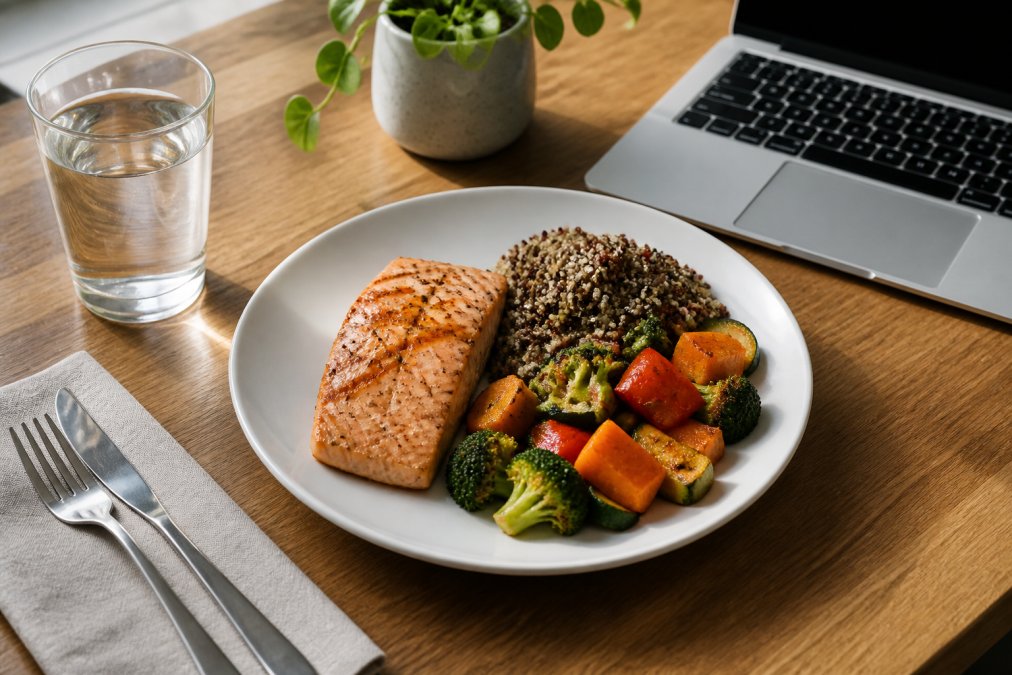
Build a Plate That Stabilizes Blood Sugar
A practical formula that many nutrition-focused practitioners use: one palm-sized portion of protein, two fists of non-starchy vegetables, one cupped hand of complex carbohydrates, and a thumb of healthy fat. Protein intake matters most here. It slows gastric emptying and blunts the glucose spike that precedes the crash.
- Protein: grilled chicken, salmon, eggs, Greek yogurt, tofu
- Complex carbohydrates: quinoa, oats, sweet potato, lentils
- Fiber: leafy greens, broccoli, peppers, beans
- Fat: olive oil, avocado, nuts, seeds
Snacks That Carry You to Dinner Without a Crash
If you need a mid-afternoon snack, pair protein with fiber. An apple with almond butter, cottage cheese with berries, or a handful of nuts with a piece of fruit all hold steady energy better than a granola bar or a pastry. The goal is sustained energy, not a second spike.
How to Boost Energy Without Caffeine: 5 Daily Habits
Learning how to boost energy without caffeine comes down to five habits that support metabolic health and alertness: consistent sleep and wake times, morning natural light exposure, regular physical activity, proper hydration status, and brief strategic napping. None is dramatic on its own. Together they change your baseline.
- Anchor your sleep schedule. Same wake time daily, weekends included. This stabilizes melatonin regulation.
- Get natural light exposure within an hour of waking. Ten to twenty minutes outdoors sets your clock.
- Move every hour. Sedentary behavior deepens the dip; short walks blunt it.
- Drink water before you feel thirsty. Dehydration alone reduces alertness.
- Nap strategically, not desperately. Ten to twenty minutes, before 3 PM.
Natural Ways to Improve Mental Clarity During the Midday Slump
Most guides treat the midday slump as one problem. It is actually two, and they need different fixes. Physical fatigue is a body problem, blood flow, glucose, hydration, posture, eye strain. Cognitive fatigue is a brain problem, depleted attention from hours of task-switching, decision-making, and screen work. If you throw a walk at a cognitive problem, or a meditation app at a physical one, you will feel like nothing works.
Cognitive Recovery: Named Techniques That Actually Work
Pomodoro method. Work in focused 25-minute blocks separated by 5-minute breaks, with a longer 15-to-30-minute break every four cycles. The structure matters more than the exact numbers. The point is that attention is a depletable resource, and short scheduled recovery prevents the slow bleed that turns into 3 PM fog.
Physical Resets: Movement, Sunlight, and Eye Strain
Digital eye strain is one of the most underrated contributors to afternoon fatigue, and most workplace guides ignore it entirely. Follow the 20-20-20 rule: every 20 minutes, look at something 20 feet away for 20 seconds. Combine that with a two-minute walk and a step outside, and you address three inputs at once, eye muscle fatigue, sedentary blood pooling, and circadian light signaling.
Posture and Breathing: The Overlooked Physical Input
Slumped shoulders and a forward head position restrict diaphragm movement, which lowers oxygen intake and worsens the fog. Reset your chair height so your feet are flat, raise your screen to eye level, and once an hour do a 30-second posture reset: sit tall, roll shoulders back, take three slow breaths into your belly. This is not wellness theater, restricted breathing genuinely reduces cognitive performance.
The Perfect Daily Wellness Stack →
Caffeine Timing: How to Use It Without Paying for It Later
Caffeine is not the enemy of an afternoon energy crash, poorly timed caffeine is. Used well, it sharpens the dip instead of deepening it. Used badly, it borrows energy from tomorrow and charges interest.
The Two Rules That Do Most of the Work
Delay your first cup 60 to 90 minutes after waking. When you wake, cortisol is already near its daily peak. Caffeine layered on top of that peak does less for alertness and does more to build tolerance. Waiting lets cortisol fall naturally, so the same dose hits harder. This is sometimes called the "caffeine nap window" by practitioners who study sleep pressure, and it is the single highest-leverage timing change most people can make.
A Practical Caffeine Schedule
- Wake: water first. Dehydration mimics fatigue and is cheap to fix.
- 60-90 minutes after waking: first coffee or tea. This is your sharpest window.
- Late morning: second dose, if you use one, ideally before 11 AM.
- After lunch: switch to decaf, sparkling water, or a short walk instead of a third cup.
- After 2 PM: no caffeine. This is the cutoff most sleep researchers recommend for adults who want to protect sleep quality.
What to Do Instead of a 3 PM Coffee
If the crash hits and you still have hours of work left, a 10-to-20-minute nap beats a late coffee for the same reason: it restores alertness without leaving residual stimulant in your system at bedtime. If napping is not possible, a two-minute walk plus a glass of water plus the 20-20-20 eye reset (below) will do more for the next 90 minutes than a fourth cup.
Caffeine Sensitivity Is Not a Moral Failure
Some people clear caffeine quickly and can drink an espresso at 4 PM without consequence. Others feel a single afternoon cup at midnight. Both are normal. If you are in the second group, the eight-hour rule may need to become a ten- or twelve-hour rule. Track your own sleep quality for a week with and without an afternoon cup and let the data decide, not the internet.
When Afternoon Energy Crashes Point to Something Deeper
Persistent, severe afternoon energy crashes that don't respond to food, sleep, and movement changes may point to something deeper, including thyroid dysfunction, sleep apnea, anemia, or chronic psychological burnout rather than simple physical fatigue. The distinction matters: burnout is driven by prolonged stress and often presents with emotional exhaustion, cynicism, and reduced performance, not just sleepiness.
Conclusion: Build Your Afternoon Reset Routine
The 2 PM crash is not something you have to accept as the price of a demanding career. Fix the lunch plate, protect your sleep, move hourly, time your caffeine earlier, and take real micro-breaks. Those five changes address the root causes rather than masking them.
Frequently Asked Questions
Why does my energy crash so hard in the afternoon?
Two forces usually line up around 1 to 3 PM. Your circadian rhythm dips naturally, lowering alertness, while a high-carb lunch spikes blood sugar and triggers an insulin response that leaves you sluggish. Add dehydration, skipped protein, or a third cup of coffee, and the drop feels worse. The fix is not one magic trick. It is stacking small changes: protein at lunch, water through the morning, a short walk after eating, and caffeine that stops before mid-afternoon.
How does blood sugar regulation affect afternoon fatigue?
When lunch is heavy on refined carbohydrates, glucose rises fast, insulin surges, and glucose then drops below baseline within a couple of hours. That drop is the crash. Pairing complex carbohydrates with protein, fiber, and healthy fat slows digestion and flattens the curve. A lunch built around chicken, beans, or salmon with vegetables and a modest starch portion keeps blood sugar steadier, which supports sustained energy and mental clarity through the afternoon.
What are the best natural ways to improve mental clarity without caffeine?
Start with hydration, since even mild dehydration reduces alertness. Then add a 10-minute walk outdoors after lunch to raise blood flow and natural light exposure. Try a 20-minute power nap before 3 PM if your schedule allows. Keep your workspace ergonomic so posture is not draining you. Finally, adaptogens like Ashwagandha help the body manage cortisol, and a daily supplement routine that supports stress and sleep pays off in afternoon focus.
Can stress management techniques help prevent midday energy crashes?
Yes. Chronic stress keeps cortisol elevated, which disrupts sleep and blood sugar and makes the afternoon dip sharper. Simple techniques work: a 5-minute breathing exercise between meetings, a short walk without your phone, and protecting your sleep window. Adaptogens such as Ashwagandha, especially when paired with black pepper for absorption, support the body's stress response. If you are on anxiety medication, check with your doctor before adding any supplement.