

Is Ashwagandha Extract Worth It for Physical Recovery?
Last Updated: October 30, 2026
Quick Summary
Ashwagandha extract is worth it mainly for indirect recovery support: trials show modest improvements in stress, sleep, and perceived recovery, while evidence for strength and muscle mass is weaker and mixed. Root extract doses of 300 mg to 600 mg daily are commonly studied, with benefits typically appearing after several weeks.
- Muscle soreness is the most commonly reported recovery endpoint, with several trials showing lower ratings versus placebo.
- Very few studies directly measure return-to-training time, the biggest gap in the recovery literature.
- Choose a root extract with a stated withanolide percentage so your daily dose is repeatable.
- Most users notice calming effects within days, but measurable recovery changes take two to four weeks.
- Avoid ashwagandha if pregnant or nursing, and check with your prescriber about medication interactions.
Table of Contents
- What the Evidence Says About Ashwagandha Extract and Recovery
- Ashwagandha for Muscle Recovery: What the Studies Actually Measure
- Extract Types and Products: How to Read a Label
- Ashwagandha Dosage for Athletes: Matching Dose to Training Load
- How Long Does Ashwagandha Take to Work for Recovery?
- Ashwagandha Side Effects and Safety for Athletes
- Start Your Recovery Stack with Dr. K's Vital Edge
- Frequently Asked Questions
What the Evidence Says About Ashwagandha Extract and Recovery
An ashwagandha extract review for physical recovery starts with one uncomfortable fact: most of the marketing runs ahead of the science. Ashwagandha, or Withania somnifera, is an adaptogen with a long traditional record in Ayurvedic practice. The clinical evidence for recovery is narrower than the claims suggest.
Here is the short version. It shows weaker, more mixed results for strength and muscle mass directly. Those are different outcomes, and blending them is how supplement pages inflate the case.
Where the Research Is Strongest
The clearest signal sits in stress-related endpoints. Randomized controlled trials have looked at cortisol, perceived stress scores, and sleep quality in adults under load, and several show modest improvements over placebo. For an athlete, that matters indirectly: a calmer nervous system and better sleep support post-exercise recovery, even if the supplement is not rebuilding tissue itself.
Where It Falls Short
Strength gains and muscle mass are where the evidence thins out. Some trials report small improvements in muscle strength and power output, while others find no benefit beyond placebo. Sample sizes are often small, treatment duration varies from weeks to months, and participants range from trained athletes to sedentary adults. A PubMed database of ashwagandha clinical trials search makes the pattern obvious: promising, inconsistent, and rarely replicated at scale.
Ashwagandha for Muscle Recovery: What the Studies Actually Measure
Recovery and performance get blended together in most ashwagandha content, and that blending is where claims outrun evidence. The honest way to read this literature is to separate what was measured, soreness, creatine kinase, perceived recovery, return-to-training time, from what was not, and then to look at how the studies were built. A result from a small trial of untrained adults taking an unstandardized root powder for four weeks does not transfer cleanly to a trained lifter in a high-volume block.
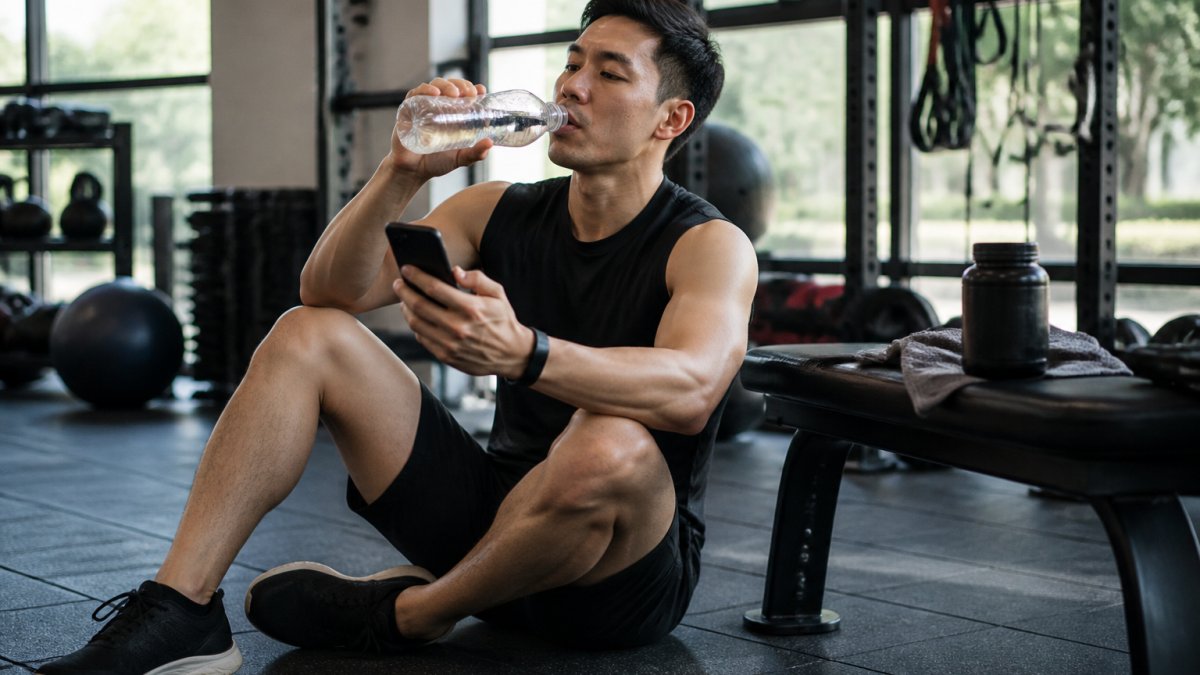
Recovery outcomes, separated from performance outcomes
Muscle soreness is the most commonly reported recovery endpoint. Participants rate soreness after resistance exercise, and several trials report lower ratings in the supplement group versus placebo.
Creatine kinase (CK) is an indirect blood marker of muscle damage. A handful of studies include it, and results are mixed, some show attenuation, others show no meaningful difference.
Perceived recovery and readiness shows up in some trials as questionnaire scores. These are useful but soft, and they overlap heavily with the stress and sleep effects ashwagandha is better known for.
Return-to-training time and actual recovery speed are rarely measured directly.
How the studies differ, and why it matters
The trials are not interchangeable. They vary on four axes that determine how much weight a finding deserves:
- Extract and standardization: root extract with a stated withanolide percentage in some studies, unstandardized root powder in others. You cannot assume the same effect across preparations.
- Dose: commonly studied root extract doses sit in the 300 mg to 600 mg per day range, but some trials use higher or lower amounts, and few compare doses head to head.
- Duration: benefits are typically reported after several weeks to a couple of months of consistent use. Short trials may simply be too brief to detect a recovery effect.
- Participant type: trained athletes, recreational exercisers, and sedentary adults respond differently, and small samples make it hard to generalize from any single study.
A structured read of the evidence, extract, dose, duration, population, comparator, and measured outcome for each study, is more useful than a headline conclusion, because it lets you judge whether a finding applies to your training. A PubMed database of ashwagandha clinical trials search will show you how often the same outcome is measured in incompatible ways.
Evidence limitations and conflicting results
The pattern across the literature is consistent enough to state plainly: small samples, varied extracts, short durations, and inconsistent recovery measures. Some trials report benefits for soreness and stress markers; others find nothing beyond placebo. That does not mean ashwagandha is useless for recovery, it means the evidence supports a modest, indirect role (stress and sleep support that helps you recover) more strongly than a direct tissue-repair role. Treat any claim of faster physiological recovery as unproven until a study measures return-to-training time directly.
Extract Types and Products: How to Read a Label
Most reviews of ashwagandha for physical recovery treat the herb as one ingredient. It is not. The extract type, the plant part, the withanolide standardization, and the delivery format all change what you are actually taking, and the clinical literature rarely uses the same preparation twice. That inconsistency is one of the main reasons study results conflict, so reading the label carefully is not a formality. It is the difference between buying into the evidence and buying a bottle that was never studied.
Root vs. leaf vs. whole-plant extracts
The majority of trials that report benefits for stress, sleep, and perceived recovery use a root extract. Root is the traditional preparation and the part most standardized products rely on. Leaf extracts appear in some products and in a smaller number of studies, and they can carry a different withanolide profile. Whole-plant or "root and leaf" blends are common in lower-cost products, but a blend makes it impossible to map your dose onto any specific trial. If your goal is to align with the published evidence, root extract is the safer starting point.
What standardization actually tells you
Withanolides are the compound class most researchers use to standardize ashwagandha, and a label that states a withanolide percentage is telling you the extract has been assayed for consistency. A label that says only "ashwagandha root powder" is selling the raw ground herb, which varies batch to batch and is not what most clinical trials administered. Standardization does not guarantee efficacy, but it does make your daily dose repeatable, and repeatability is what allows you to judge whether the supplement is working for you over an eight-week training block.
A practical comparison framework
Use the same four questions for every product you pick up:
- Plant part: root, leaf, or blend? Root extract matches most of the recovery-adjacent evidence.
- Standardization: is a withanolide percentage stated, or is it unstandardized powder?
- Extract dose per serving: how many milligrams of extract, not how many milligrams of capsule weight? Capsule weight often includes fillers.
- Delivery format: capsule, powder, or liquid, and is there an absorption aid such as black pepper extract?
A product that answers all four is auditable. A product that answers none is a marketing claim in a bottle.
Formulation trade-offs worth knowing
Black pepper extract (piperine) is frequently added to ashwagandha products to improve absorption, and it is a reasonable formulation choice, but it also affects how other compounds are absorbed, which matters if you take prescription medication. Liquid and powder formats can be easier to dose flexibly but are harder to standardize than a sealed capsule. Our guide on how to read a supplement label without the guesswork walks through the panel line by line if you want to apply this framework to a specific bottle.
Ashwagandha Dosage for Athletes: Matching Dose to Training Load
There is no official athletic dose, and anyone who quotes one precise number is overselling certainty. What the trials do show is a range: root extract doses commonly studied sit between 300mg and 600mg per day, taken consistently for several weeks. Higher is not automatically better, and more frequent dosing has not been shown to beat once daily.
| Training Load | Practical Approach | What to Watch |
|---|---|---|
| Off-season, low volume | Standard daily dose, taken consistently | Consistency matters more than timing |
| Moderate resistance training | Daily dose with a meal | Mild digestive upset if taken on an empty stomach |
| High volume or two-a-days | Daily dose plus sleep and protein priorities | Do not expect the supplement to cover a recovery deficit |
| Competition week | Keep the routine unchanged | Avoid introducing anything new |
For athletes running a consistent daily schedule, a 90-day supply of organic ashwagandha removes the risk of running out mid-block.

How Long Does Ashwagandha Take to Work for Recovery?
Many users report a calming effect within the first few days, but measurable changes in stress markers and perceived recovery generally show up after two to four weeks of consistent use. Studies that report benefits typically run for at least eight weeks, which tells you the timeline is measured in training blocks rather than sessions.
If you are coming from a stimulant-based pre-workout, adjust expectations. Ashwagandha is not a switch you flip before a session. It builds.
Ashwagandha Side Effects and Safety for Athletes
Ashwagandha is generally well tolerated. The most common ashwagandha side effects reported in trials are mild digestive upset, usually when taken without food. Some participants report drowsiness, though most find it non-sedating during the day.
A few cautions deserve a direct mention. The U.S. Anti-Doping Agency supplement guidance is worth reading before you buy anything off a shelf.
Watch out: taking a sedative or thyroid medication and adding ashwagandha without telling your doctor is the mistake we see most often, and the interaction is not always obvious until it causes a problem.
Start Your Recovery Stack with Dr. K's Vital Edge
Recovery is a stack, not a single bottle. Ashwagandha handles the stress and sleep side. Protein and creatine handle the rebuilding side. If you want to round out that stack, our guide to the best natural supplements for recovery covers what pairs well with ashwagandha. BCAAs can help with soreness between sessions.
If you are ready to add the adaptogen layer, start with our organic ashwagandha extract. It is USDA Organic certified, third-party lab tested, and paired with black pepper extract for absorption. Customers like Tosha P. and Rico J. rate it 4.9 out of 5.

Frequently Asked Questions
Is ashwagandha good for muscle recovery?
Clinical trials suggest ashwagandha extract may support muscle recovery by lowering cortisol and reducing markers of muscle damage after resistance training. The effect is modest, not dramatic, and most studies use trained participants over 8 to 12 weeks. Treat it as one part of a recovery plan that also includes protein, sleep, and programmed rest days.
How long does ashwagandha take to affect exercise recovery?
Most trials that measured recovery outcomes ran for at least 8 weeks before reporting meaningful changes in soreness or muscle damage markers. Some participants notice calmer sleep and lower perceived stress within the first two weeks, but recovery-specific benefits build more slowly. Many users notice initial calming effects within a few days.
What ashwagandha dosage for athletes is supported by research?
The most commonly studied doses fall between 300 mg and 600 mg of standardized root extract per day, taken consistently. Dr. K's Vital Edge Ashwagandha delivers 600 mg of organic root extract per serving with black pepper extract added for absorption. Take as directed by your healthcare professional.
What are the side effects of ashwagandha for athletes?
Most people tolerate ashwagandha well. The most common ashwagandha side effects are mild digestive upset, drowsiness, and headache, usually when starting. It can interact with thyroid medication, sedatives, and immunosuppressants. Athletes subject to drug testing should buy from brands that use third-party testing, since unverified herbal products can carry contamination risk.
The hardest part of recovery supplementation is not finding a product. It is staying consistent long enough to know whether it works. Dr. K's Vital Edge built its ashwagandha around that problem: a clinically studied 600mg dose, black pepper extract for bioavailability, and organic certification you can verify on the label. Get started with Dr. K's Vital Edge and give your recovery the same discipline you give your training.
